Have you ever wondered how steam power works? Steampunk is fun and cool, partly because of the charm of stylish Victorian clothing. But also due to old time tech being carried forward in new ways. We see gadgets and communications devices that are designed to be fancier and more elegant, yet still hung upon steam power.
And there it is. The old bugbear of steam power. While supposedly a limiter, it’s fun to see how creative writers get with taking such an old source of power to be carried further along.
But before we can do that, perhaps it pays to really understand how steam power works.
It’s good to understand that the concept of steam power goes back long ago. Millenia. However, it didn’t really get moving until the 1600s. This was when Isaac Newton ruled Cambridge. A key facet of steam power gaining momentum was the vast growth of science and mathematics in that era.
This was the time frame where “modern” people like Descartes, Galileo, Kepler, and others became the current mode of study. Calculus, engineering, astronomy, and physics were making leaps and bounds.
And the ability to build steam engine prototypes, take notes, derive equations, and make educated guesses empowered people to truly grow.
It had been discovered that when water is heated, it turns into a gas with pressure, that would later turn back to its liquid state. But that was not all. Steam had multiple properties that made it ripe for inventions:
- The pressure of steam gas made it possible to actuate components.
- As a gas, it had the ability to be transported through pipes. Metallurgical engineering had made it possible to create pipes fitting just about any scenario, allowing steam to be “piped” where it needed to go.
- Water was easy and inexpensive to obtain, store, transport, and refill.
That last part can’t be overstated. Steam, being based on water, was inexpensive. Love it or hate it, commodities that don’t cost a lot are easier to fit into any economic model.
While this describes many of steam’s properties, it doesn’t really explain how it works. Steam is based on the concept that you heat water in one part of the machine, turning it into a gas with pressure.
So steam power was possible because it was plentiful, we had the tools to learn how it worked, and it didn’t cost a fortune to experiment and develop better and better engines.
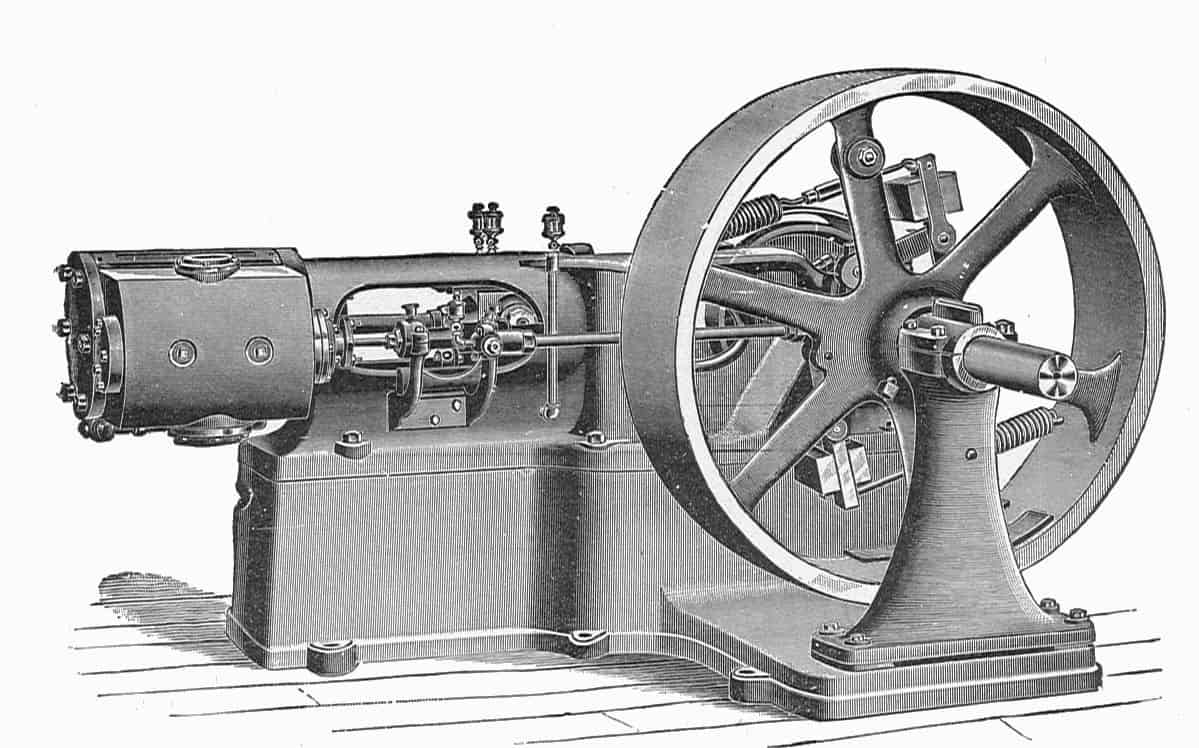
The steam can be directed into some form of piston. The piston moves, and subsequently turns a crankshaft. This motion is then mechanically transferred elsewhere, like the wheels of a train or perhaps to a pump.
Once the steam has pushed, it can then be routed back to a condensing location where it turns back into water. It is then drained back to the original location where it can repeat the whole process.
Now something that must be made clear is that steam itself isn’t the source of energy. Steam is, instead, the means to convert one form of energy into another. A common source of energy was burning either wood or coal.
Wood is very easy to burn. We’ve been doing it for most of recorded history. But it takes a lot of effort to chop down trees, haul them in, and then simply burn them to generate steam power.
Coal became quite popular, because miners could retrieve large amounts in a relatively small area. It is much denser that wood, and doesn’t require cutting down forests in order to provide the means to generate steam. Coal mining has its own issues, but we won’t go into that here. It’s simply good to understand why it was picked up back in the 18th and 19th Century.
Another thing that we had a lot of back in the day was improvement and enhancement. In the middle of the Industrial Revolution, people weren’t just inventing new machines. They were taking other people’s inventions and enhancing them. Solving inefficiencies. Making them better, faster, and stronger (they had the technology).
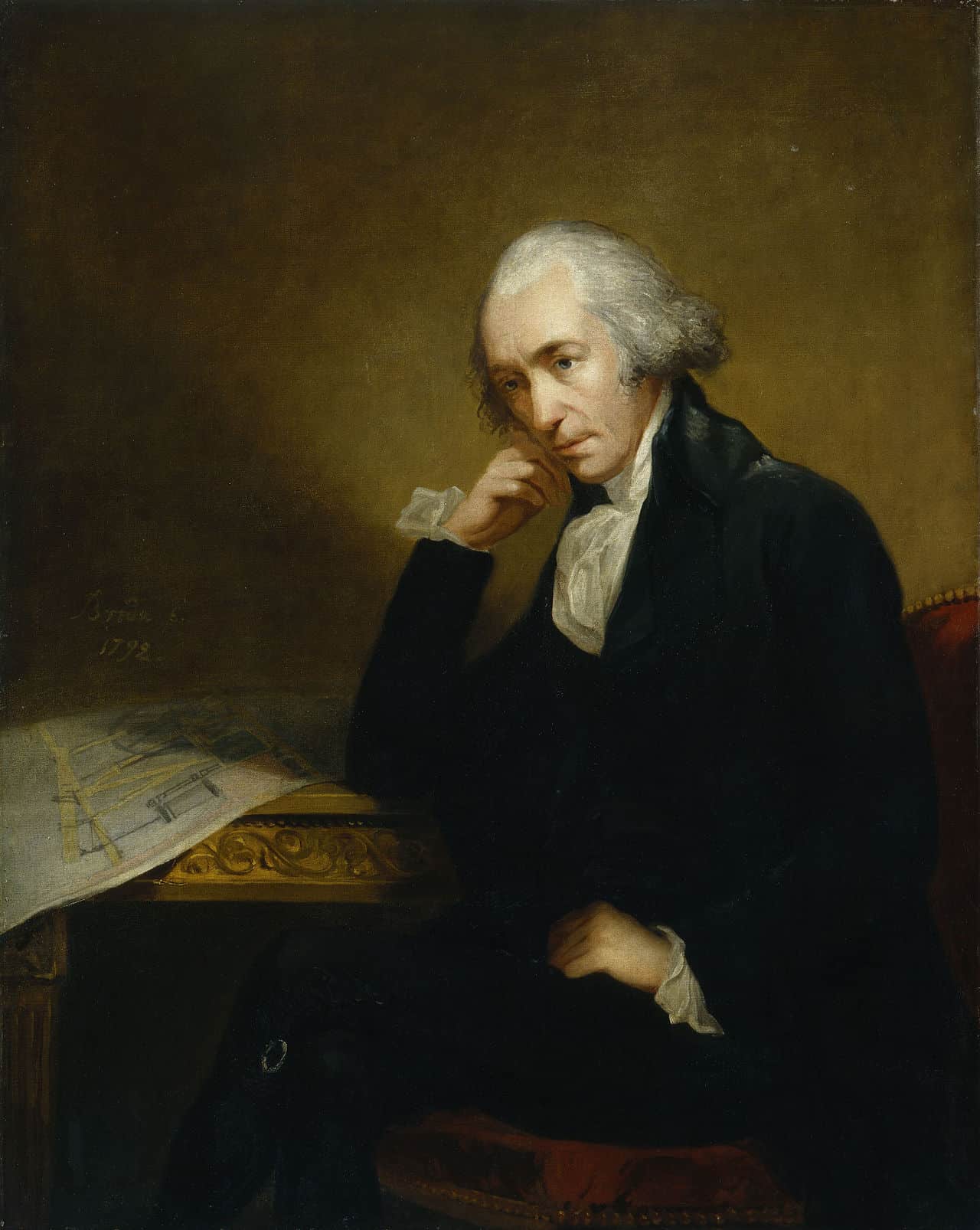
One such individual was James Watt. He had spied a massive inefficiency in the current crop of steam engines. There was a wasted amount of steam in the way the water circulated throughout the system. So he made it much better, and even effected a patent.
He also expanded the ability of a steam engine’s power to more uses. They were initially used solely for pumping water. He imagined it being used for far greater commercial work. He also came up with new ways to channel its power.
All these things fed the amazing expansion of the Industrial era. The steam engine provided an almost unlimited source of power for all kinds of industrial machines.
And this provided the source of lots of jobs. Cities grew by leaps and bounds (for better or for worse). Many people also built careers out of fixing and repairing machines and engines. A whole new crop of jobs emerged to support this technology. It became very prized to understand how steam power works.
All from a little thing used to make coffee or tea. Who would have thought?